
Clinch County Jail Release Paths
Clinch County Jail is the county jail operated by the Clinch County Sheriff's Office. A person can leave it through bond, a court order, sentence expiration, credit for time served, or a disposition that ends the need for local confinement. The jail may also release a person to another custodian. That transfer ends the Clinch County booking but does not mean the person is free. A state sentence can send the person to the Georgia Department of Corrections. A separate federal or immigration hold can lead to USMS or ICE custody when the facts of the case support that route.
The destination is therefore as important as the release date. A bond release usually returns the person to the community while the criminal case continues. A discharge after a local sentence may end the jail term, yet probation can follow. A GDC transfer moves the person from local jail custody into the state prison system. The sheriff's release or transfer record should identify the order and issuing court. Georgia law requires the county jail record to include the day of discharge, the discharge order, and the court from which that order issued.
| Local entry | What it means | Next check |
|---|---|---|
| Bond or court order | Local custody ended while a case may remain open | Clinch court record |
| Sentence expiration or time served | The local confinement term ended | Jail discharge and sentence |
| Transfer to GDC | County custody ended, state custody began | GDC Offender Query |
| Federal or ICE transfer | Another legal custodian received the person | BOP, USMS, or ODLS as applicable |
Confirm a Clinch Jail Release
No official Clinch County online jail roster or recent-release feed was found on the sheriff page or the GDC county-jail listing. Start with the official sheriff channel. A released person may have disappeared from any current-custody view, so ask for the booking and release record rather than relying on a live roster. Give enough detail to distinguish the correct person, such as full name, birth date or age, approximate arrest date, charge if known, and the likely release period.
- Contact the Clinch County Sheriff's Office and ask whether the person remains in local custody.
- If local custody ended, ask for release date and time, release reason, discharge order, and any receiving agency.
- Request the booking and discharge record when staff cannot give the needed facts by phone.
- Check the issuing court when release followed bond, dismissal, sentencing, or another court order.
- If the record says transfer, continue with the named state or federal custodian.
A state-prison record is not the first source for a person who bonded out of Clinch County Jail. GDC becomes relevant only when the person entered state custody. For one named local release, the broader Clinch County released-inmate search path explains how the sheriff, courts, VINE, and GDC records fit together.
Clinch Jail Discharge Records
O.C.G.A. 42-4-7 gives the local record a clear legal spine. The sheriff must keep a record of each person committed to the county jail. Required facts include the person's name, age, sex, and race; the process and court that caused commitment; the charge; commitment date; day of discharge; discharge order; and court that issued that order. These entries can prove that a jail event ended even when no public web archive exists.
Ask for existing records, not a new report. A narrow request may seek the booking sheet, release or discharge record, bond record, transfer record, and the court order authorizing release. If a booking photograph is requested, Georgia's separate booking-photo statute requires care and a compliance statement. An agency does not have to create fields that its system does not maintain. It can provide the records it has and state when responsive material is unavailable.
| Field | Release value |
|---|---|
| Day of discharge | When county jail custody ended |
| Discharge order | The legal authority for release |
| Issuing court | Where to verify bond or disposition |
| Transfer destination | Which agency may hold the person next |
| Booking identifier | Connects the request to the correct jail event |
Georgia's Open Records Act generally calls for an initial response within three business days. That is a response deadline, not a promise that every record will be delivered in that span. If production will take longer, the agency can describe the records and provide a time and cost estimate. Keep the request tied to one person and one booking when possible.
Note: A statutory discharge entry is more durable than a current-custody screen after the person leaves the jail.
Clinch Jail Records Contact
The sheriff is the proper local custodian for Clinch County Jail booking and release records. The official county page identifies the department as the jail operator. It also supplies one main office and jail number. Calling first can show whether the inquiry concerns an active booking, a completed discharge, or a transfer that must be followed into another system.
Clinch County Sheriff's Office / Clinch County Jail115 Court Square
Homerville, GA 31634
Phone: 912-487-5316
Fax: 912-487-3602
The GDC facility listing for Clinch County Jail confirms the county-jail classification, address, and primary phone. It does not turn the jail into a GDC state prison, and it does not provide an online release roster. The listing is a facility reference. Local release records still come from the sheriff.
The official GDC listing appears below so the facility identity can be checked against the same source.
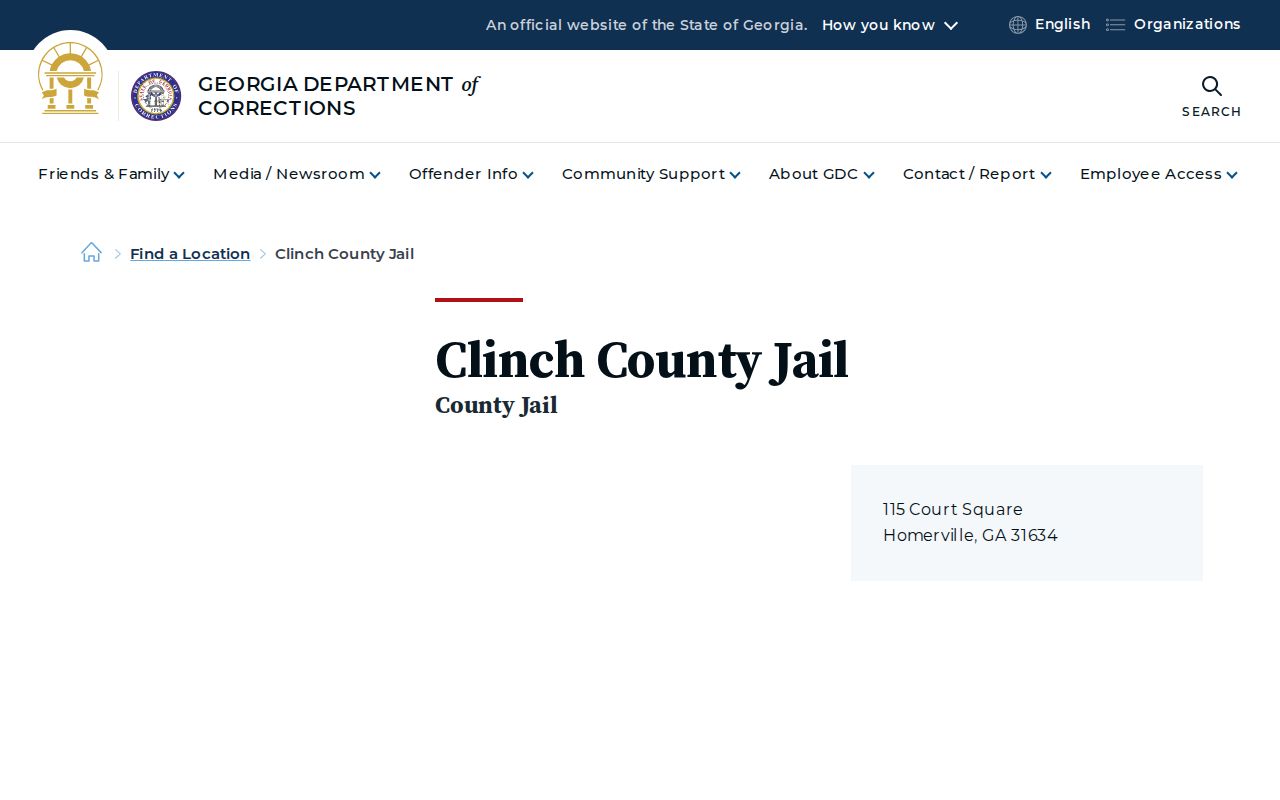
The image confirms the county-jail contact channel, not a live list of released people.
Clinch Jail Bond Releases
Bond is one of the most important distinctions in local release research. The Clinch County Probate and Magistrate Court page says Magistrate Court handles warrants, preliminary hearings, arrest and search warrants, bail, and criminal matters not reserved to another court. A person released on bond has left the jail, but the underlying charge may still be pending. The release record answers when custody ended. The court file answers what the bond required and what happened next.
Superior Court records may become central in a felony case. The Clerk of Superior Court files criminal cases, maintains criminal warrants, and helps the public obtain court records. Check the court named in the discharge entry instead of assuming that one court holds every paper. A bond order, later indictment, plea, dismissal, sentence, or revocation can each alter the record trail.
Note: A bond release is a custody event, not a finding that the criminal case has ended.
Clinch Jail Earned-Time Releases
The same Georgia statute that defines county jail records also addresses earned time for some sentenced county inmates. O.C.G.A. 42-4-7 permits the sheriff, chief jailer, warden, or designated custodian to award earned-time allowances based on institutional conduct. For eligible county inmates sentenced to confinement, release occurs at sentence expiration less awarded deductions. Earned time is not automatic for offenses committed on or after July 1, 2000.
This local rule should not be confused with a GDC maximum possible release date or a Tentative Parole Month. Those state-prison concepts belong to different agencies. For a Clinch County Jail sentence, request the local sentence and discharge record. Ask whether earned time was actually awarded. The statute authorizes a process, but it does not establish that every person receives the same credit.
The county jail record and earned-time law is shown in the captured source below.
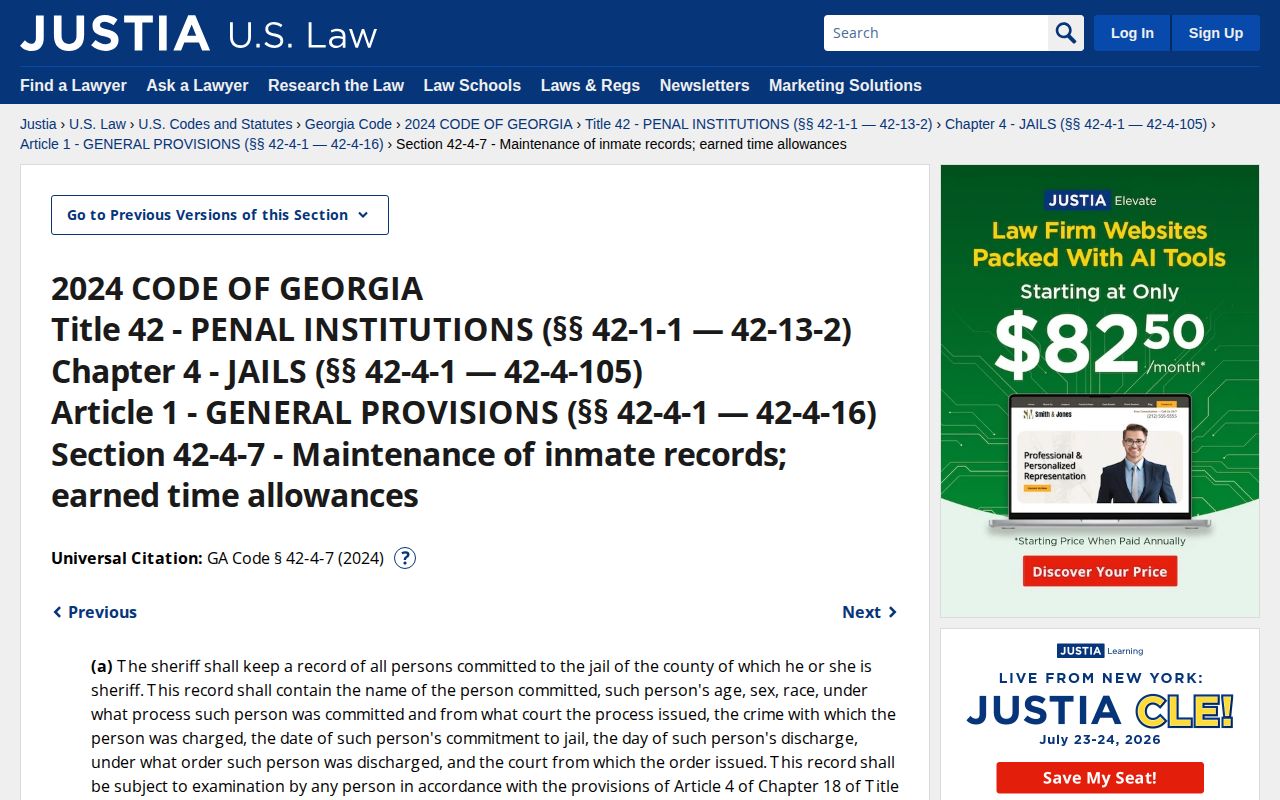
Its release fields explain why the sheriff's discharge record is the key local source.
Historic Clinch Jail Releases
Clinch County has a historic jail that must not be mistaken for the current release-record source. Local history reports that the Old Clinch County Jail was built in 1894 to replace an earlier wooden jail, served until 1927, and was later saved from demolition by the Homerville Woman's Club. That story gives the county's jail history real depth, but the old building does not hold today's booking or discharge files.
Current inquiries belong at the sheriff and jail contact on Court Square. The historical source is useful only for context. A photograph, address reference, or old building name found in local history should never be treated as evidence of present custody. Modern release confirmation comes from the current sheriff's statutory record, the court that issued the discharge order, or the receiving agency named in a transfer.
Note: The 1894 jail is historical; it is not the current Clinch County Jail or a present records office.