
Georgia VINE Coverage in Clinch
Georgia VINE through VINELink is presented as a free, secure, and confidential service for custody status, criminal case information, offender location, and notifications. Coverage depends on participating agencies and their data feeds. The research does not establish that every historical Clinch County booking or release is archived there. That limit is important because the sheriff’s official page does not provide a public recent-release feed.
VINE can be useful while a person is in a participating county or state custody system. It may report a status change, a release event, a custody agency, or notification availability. It should not be expected to supply the full booking sheet, discharge order, bond terms, sentence details, or a certified release date. Those facts belong to the Clinch County Sheriff, GDC, or the court.
Federal systems remain separate. A sentenced federal prisoner is checked through the Bureau of Prisons locator. A federal pretrial detainee may be held for the U.S. Marshals Service, sometimes in a local jail. ICE has its own Online Detainee Locator. A blank VINE result is not proof that none of those agencies has custody.
Search One Clinch Inmate on VINE
Start with the strongest identifiers available. A full legal name, date of birth or age, offender ID, and known agency reduce the risk of choosing the wrong person. Small counties still have name collisions. Nicknames, spelling changes, and delayed feed updates can also hide a valid record.
- Open the Georgia VINE page. If using the national VINELink entry, select Georgia first.
- Choose the person or offender search offered by the current interface.
- Enter the full name or offender ID. Begin with fewer filters, then narrow the list if the result set is broad.
- Compare every available identifier and custody agency. Do not rely on the name alone.
- Open the matching record and read the current custody status, agency, event information, and notification options.
- If the record says released or no longer in custody, contact the source agency for the date, reason, order, or transfer destination.
The Clinch County released-inmate search provides the fallback chain when VINE has no match. For local custody, call or request records from the sheriff. For a state prisoner, search GDC with an all or inactive scope. For case outcome, compare the Superior or Magistrate Court record.
Clinch VINE Release Fields
Results vary by the agency feed, so a field may be absent even when a person has a valid record. Read the status as a lead. Then identify which government office owns the underlying release event.
| Field or event | What it can tell you |
|---|---|
| Name or offender ID | Helps distinguish the matching person when supplied by the feed. |
| Custody status | May indicate in custody, released, or another current state. |
| Custody agency | Identifies the office to contact for confirmation. |
| Custody change | May reflect release, transfer, or another event. It does not always state the legal reason. |
| Notification option | Shows whether alerts can be registered for that record through the current interface. |
A “released” event does not always mean release to the community. A person can leave Clinch County Jail through bond, court order, time served, sentence expiration, or transfer. A transfer to GDC, USMS, ICE, or another jail ends local custody but begins or continues custody elsewhere. The sheriff’s discharge record should identify the discharge order and issuing court, while a transfer record may identify the receiving agency.
Register for Clinch Release Alerts
Registration follows the matching record. Available channels can change with the VINE interface and the agency feed. The research identifies phone, email, text, or another channel offered on screen. Do not assume every option will appear for every record.
- Locate and open the correct person’s record.
- Select the registration or notification option shown for that record.
- Choose an available phone, email, text, or other delivery channel.
- Enter the destination carefully and follow the confirmation prompts.
- Create or confirm a PIN if prompted. A PIN can help confirm receipt or manage calls.
- Complete registration and retain the confirmation details.
- When an alert arrives, verify the event with the sheriff, GDC, court, or supervision agency.
The alert can help with a personal safety plan, a court process, or reconnecting after release. It is not the release order. If an expected message does not arrive, check the record directly and contact the custodian rather than assuming no change occurred.
The national VINELink entry is the source shown in this manifest capture.
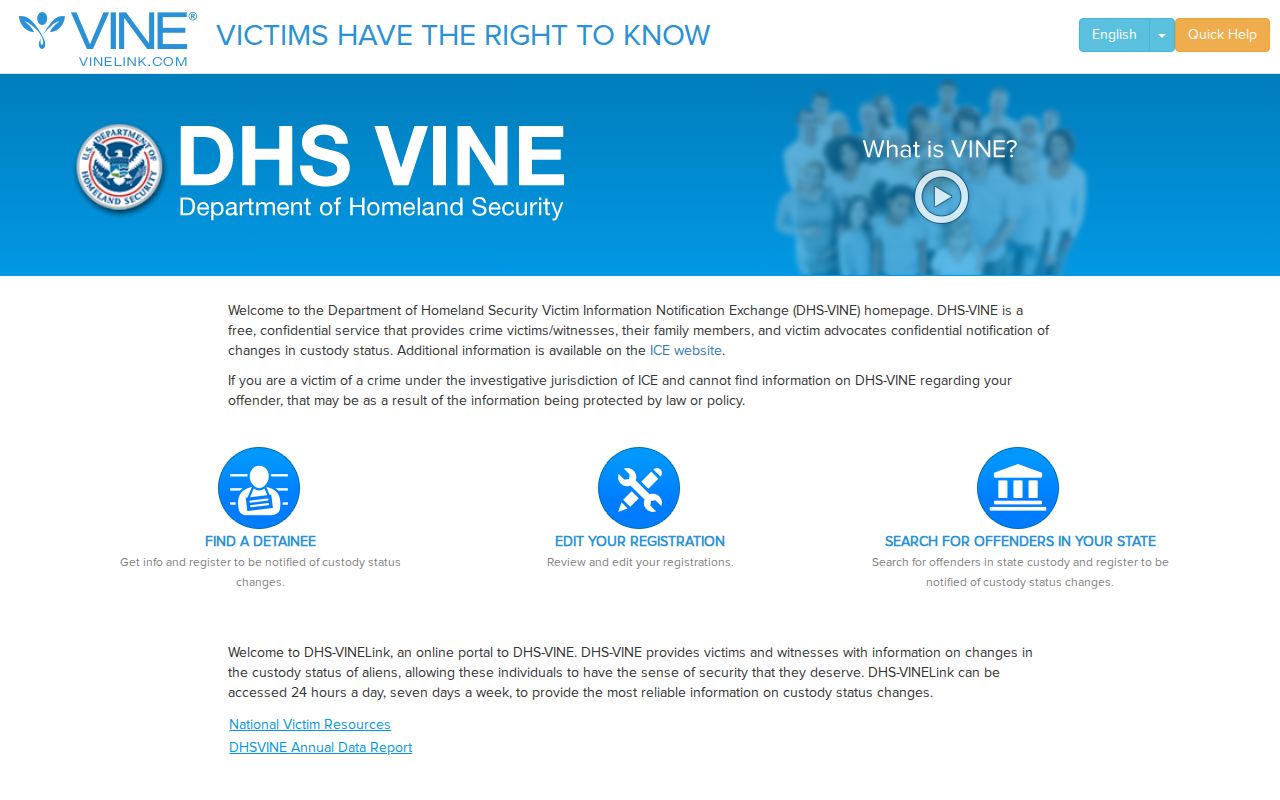
From the national entry, select Georgia before searching so the record is matched to the proper state feed.
Confirm Clinch VINE Release Results
VINE data can lag, coverage can vary, and an older event may no longer be searchable. The service also does not replace federal locators. For a Clinch County Jail event, call the sheriff at 912-487-5316 or request the booking and release record from 115 Court Square, Homerville, GA 31634. Georgia law requires the county jail record to include the day of discharge, discharge order, and court that issued the order.
For state prison, use GDC Offender Query. Search all or inactive records and compare the GDC ID, most recent institution, max possible release date, actual release date, and current status. GDC also offers a “Released In The Past 15 Days” filter, but that covers state offenders rather than all Clinch County jail releases.
Keep a short record of each check when timing matters: the date and time, the name or ID searched, the displayed agency, and the status shown. That note helps explain a later change without treating the earlier screen as permanent. If two sources disagree, ask the named custodian for the event record. A sheriff discharge can coexist with a later GDC admission, and an inactive GDC status can coexist with parole supervision. The sequence of records is often more useful than a single screen.
Clinch Custody Systems After Alerts
Follow the legal custodian shown by the facts. If the person bonded out of Clinch County Jail, the sheriff’s discharge record and the Magistrate or Superior Court file explain the local event. If the person transferred to GDC, a disappearance from the jail is not a community release. The state record should show the assigned institution and later release fields.
For parole after a state release, the Board’s parolee database and DCS Lakeland Virtual Office are the relevant channels. The office serves Clinch as part of the Alapaha Circuit. For a federal sentence, use BOP. For a USMS detainee, contact the detention facility or federal district office. For immigration detention, use ICE ODLS only when case-specific facts support that path.
These systems do not merge into one universal roster. VINE is most useful as an alert between checks. The source record remains the best evidence of why custody changed, where the person went, and whether supervision followed.
Pair Clinch Alerts With Court Records
A custody alert answers “did the status change?” A court record answers “what legal event caused or followed that change?” Clinch Magistrate Court handles bail in matters not reserved to another court, along with warrants and preliminary hearings. The Clerk of Superior Court maintains criminal cases and warrants on the superior-court side. A bond release can occur while the criminal case remains open.
Look for a bond order, dismissal, nolle prosequi, sentence, credit for time served, revocation, or transfer-related disposition. Georgia Courts E-Access lists Clinch Superior as connected to PeachCourt, though an account or clerk contact may still be needed. If the online record is incomplete, request the relevant document from the clerk.
Note: VINELink is a notification and status service, not a certified court or jail record.
Prove a Clinch VINE Release
A VINE alert becomes more useful when paired with the exact record created by the releasing office. For the Clinch County Jail, O.C.G.A. 42-4-7 requires the sheriff to keep a record of each person committed to the county jail. The required facts include the date of commitment, day of discharge, discharge order, and the court that issued the order. That statutory record can resolve an alert that says only “released” or reports a custody change without explaining why it occurred.
Make a narrow request to the Clinch County Sheriff when phone confirmation does not supply enough detail. Give the full name, date of birth or age, approximate booking date, and known charge or case number. Ask for the booking and release record, release date and time, release reason, discharge order, issuing court, and transfer destination when applicable. Georgia’s Open Records Act generally calls for an initial response within three business days. An agency does not have to create a new report if no responsive record exists, and lawful search, redaction, production, or copying charges may apply.
State custody requires a different comparison. The GDC detail view can show a GDC ID, most recent institution, Max Possible Release Date, Actual Release Date, and Current Status. An inactive status with an actual date supports a completed GDC release, while a maximum date alone remains a sentence marker. The Parole Board lookup and DCS Lakeland Virtual Office may then show whether community supervision followed. These later state records do not replace the sheriff’s record of an earlier Clinch jail discharge.
If VINE and an agency record show different times, retain both and ask the data-owning office about the discrepancy. A feed may update after the legal event, and a transfer may create an end time in one system plus a start time in another. Report the government record’s event and the alert time as separate facts.